Best Time
October to March
Ideal Duration
2–4 days
Travel Style
Royal Heritage
Overview
Tripura is a destination of measured luxury and quiet grandeur. Often overlooked for its modest scale, it rewards discerning travelers with depth over drama—palaces that echo history, sacred sites carved into stone, and a pace of life that invites reflection rather than spectacle.
Characterised by rolling hills, fertile plains, forests, and river systems, Tripura carries a soft, enclosed elegance shaped by geography and history. Its proximity to Bangladesh has created a unique cultural synthesis, blending royal traditions with indigenous and regional influences in a harmonious, understated manner.
Geography & Natural Character
- Rolling hills and fertile plains
- Forested landscapes and river systems
- Soft, enclosed geography creating a sense of privacy
- Cultural synthesis influenced by proximity to Bangladesh
Wildlife & Nature Experiences
Spiritual & Heritage Significance
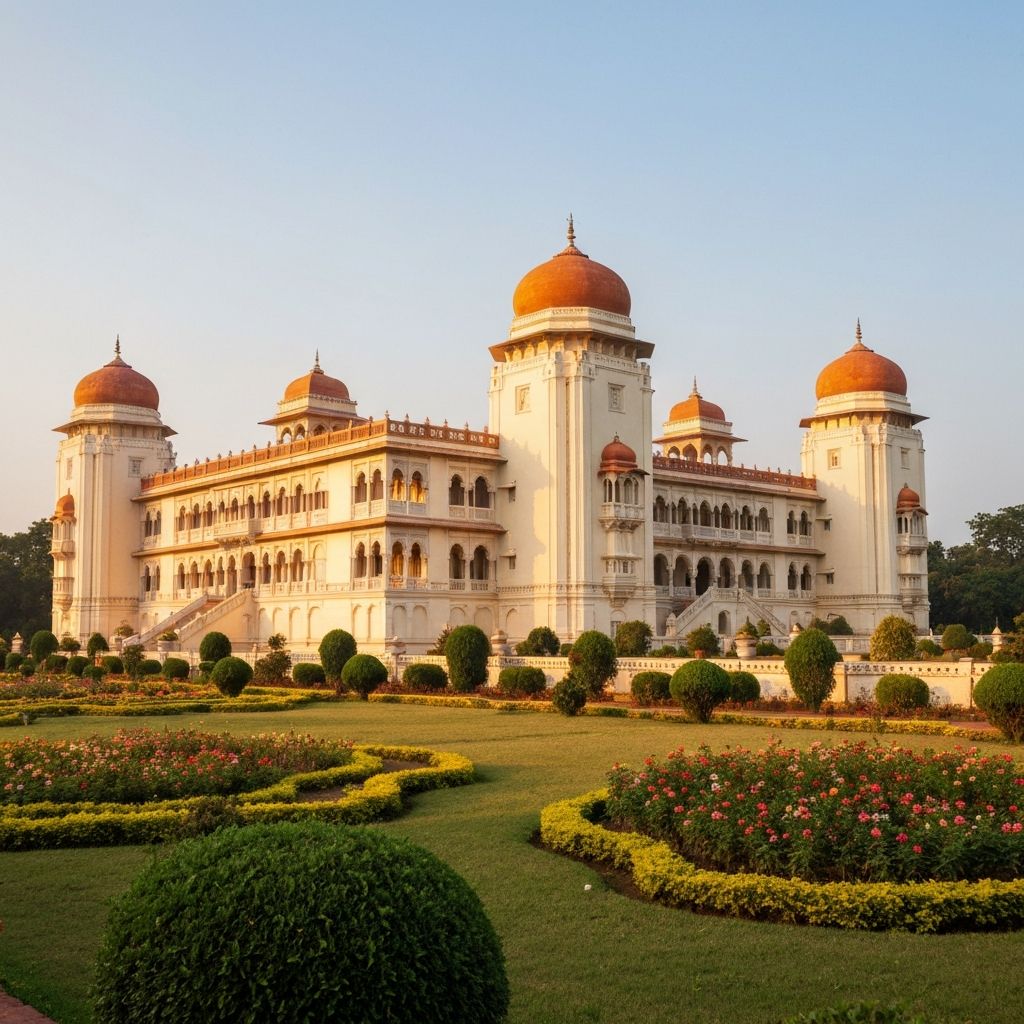
Ujjayanta Palace
The architectural crown jewel of Tripura, a neo-classical palace set amidst landscaped gardens, once a royal residence and now a museum reflecting monarchical elegance.
Neermahal
India’s only lake palace, blending Hindu and Islamic architectural styles and rising gracefully from the still waters of Rudrasagar Lake.
Unakoti
An enigmatic archaeological and sacred site featuring massive rock-cut Shaivite carvings, offering a deeply spiritual and mystical presence.
Tea, Craft & Slow Luxury
Tripura does not seek grandeur—it embodies grace. With its royal legacy, ancient sacred sites, and peaceful cultural rhythm, it provides a dignified, reflective conclusion to a luxury journey through Northeast India.